

A Look At The Future Of Gaming
What's more, in the five years between the two reports, and since digital content was introduced, it has already grown to $5.9 billion in revenue. Total game sales in 2005 was $7 billion. The ESA notes that this is a doubling of the figures from 1996. In 2010, total game sales was over $25 billion. That is, during the figures doubled in the ten years between 1996 and 2005, they have nearly quadrupled in the five years since 2005.
The same maxim as well applies to games
The same maxim as well applies to games. The best gaming system is the one you have with you. Like the effect smart phones are having on photography, the explosion in mobile gaming can be attributed to the ubiquity of smart phones. However let's clear something up: mobile gaming isn't just done when people are away from their PCs and consoles. As a matter of fact, 47% of mobile gaming is done at home.
Part of what's lead us to this place is the relentless arms race involved with hardware. Buy a new PC and it will be obsolete within a couple of years, no longer able to play the latest games. In the same fashion, the current generations of consoles are starting to show their age and many are expecting the at once console cycle to begin as early as 2013, forcing people who want to play the latest games to upgrade. But together, factors just as the broader changes in the gaming landscape -- just as the aforementioned rise of mobile and social gaming — and broadband penetration rates mean that the future could look very different from now.
Cloud gaming is already on its way to becoming a reality, with two companies having already launched thin-client services aimed squarely at the gaming market: Gaikai and OnLive. Though they're both approaching the problem from different angles, both of these companies enable high-definition gaming on any TV or device capable of receiving a broadband signal. Because the real hard work — all the heavy lifting and computation — is being done on the other end of the cloud, this means high-end games can be played on even low-powered devices.
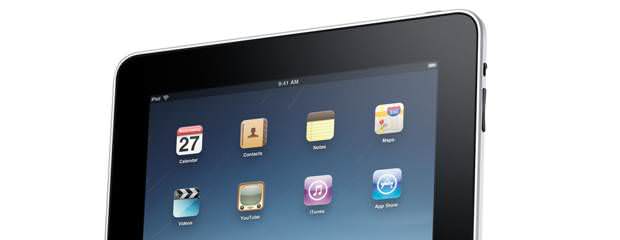
However, we're starting to see steps being taken by the current generation of game makers and hardware developers showing that they think this is the way the industry is moving. At this year's E3, Nintendo announced the successor to the Wii, the Wii U. Where the Wii was focused on motion control, the Wii U has a new selling point — it blurs the line between the TV and the console. After a fashion, the Wii U is taking a 'thin client' approach to gaming except the 'cloud' will be your living room. Similarly, with iOS 5, Apple are launching a feature called 'AirPlay Mirroring' where the display of the iPad can be wirelessly 'mirrored' to an Apple TV.
But like as not the most significant move in this direction is Blizzard's recent announcement that their MMO juggernaut, World of Warcraft would be moving to a hybrid model. This announcement is important for a number of reasons, however most importantly because it's a tacit acknowledgment that the free-to-play model works. Whether or not it works to achieve World of Warcraft levels of business remains to be seen, yet it's saying that it works for getting people hooked on a game.
- · Rackspace debuts OpenStack cloud servers
- · America's broadband adoption challenges
- · EPAM Systems Leverages the Cloud to Enhance Its Global Delivery Model With Nimbula Director
- · Telcom & Data intros emergency VOIP phones
- · Lorton Data Announces Partnership with Krengeltech Through A-Qua⢠Integration into DocuMailer