

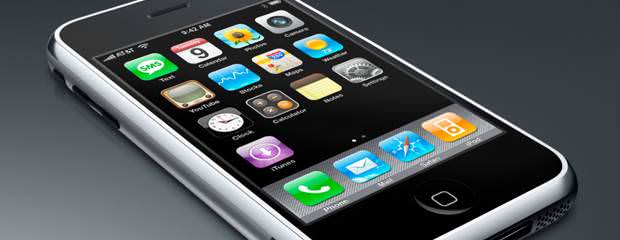
Apple iPhone 4
The good: The iPhone 4 offers improved performance, a lovely new display, and an improved design. It also adds a ton of sorely needed features, both by itself and through the iOS 4 update.
The bottom line
The bottom line: With iPhone 4, Apple again shows that it's a powerful player in the smartphone wars. It won't be for everyone, and AT&T remains a sticking point, but the handset's striking design, loaded feature set, and satisfying performance make it the best iPhone yet.
With a revamped design, a sparkling new display, a speedy processor, and additional features, Apple iPhone 4 is the biggest upgrade to Apple's smartphone since the iPhone 3G. It's also the showcase handset for Apple's newest operating system, iOS 4, which adds a selection of long-overdue features, plus a selection of smaller tweaks that we weren't expecting.
Revamped design
With a revamped design, a sparkling new display, a speedy processor, and additional features, Apple iPhone 4 is the biggest upgrade to Apple's smartphone since the iPhone 3G. It's also the showcase handset for Apple's newest operating system, iOS 4, which adds a selection of long-overdue features, plus a selection of smaller tweaks that we weren't expecting.
If they existed independently, iPhone 4 and iOS 4 wouldn't be much more than blips on the smartphone radar screen. When combined into one handset, however, the result is a sleek, satisfying, and compelling device that keeps Apple strongly competitive in an increasingly crowded marketplace. Indeed, the iPhone 4 is fast, the new hardware is a looker, and some of the new features blew us away. On other points, however, we have some concerns. Call reception still has its problems, and though we welcome multitasking with open arms, it has its drawbacks. Also, though the FaceTime video calling is more than noteworthy, we wonder if our interest will last more than a week.
So should you buy it? If you're an iPhone fan, you've probably already ordered your new baby. But if you're on the fence, think carefully. We won't say that the iPhone 4 is the best smartphone on the market today. To do so would ignore so many great competing handsets, and the fierce rate of change in the technology world. If you prefer Apple's vision of a polished, highly organized, and slightly closed user experience, then by all means you'll be pleased. But if you prefer a smartphone that offers more personalization, that isn't shackled to AT&T, or that is equal parts phone and mobile computer, than there are plenty of smartphones in the sea.
So much glass is shiny and beautiful, but we have a couple of concerns. Despite the oleophobic coating on both the front and back sides, the glass attracts smudges by the ton. Also, even though Apple CEO Steve Jobs promises that glass better resists scratches and cracks than plastic, we'll be watching long-term durability. In initial testing, the iPhone 4 did have a solid, sturdy feel in the hand and it survived a few drops to a carpeted floor. Time will tell, however, how it holds up to heavy use.
At 4.5 inches by 2.3 inches by 0.37 inch, the iPhone 4 is as tall as the iPhone 3GS, but slightly thinner--25 percent, to be exact--and narrow when measured across its front face. It does feel smaller when compared with its predecessors, but we don't think that's a bad thing. Jobs called it the thinnest smartphone around, but since that race changes daily, it may not hold the title for long. When put on the scales it comes in at 4.8 ounces, which is back to what we had with the first iPhone (both the 3G and 3GS models were slightly lighter). We attribute the extra girth to the bigger battery, so we're not going to complain. And more to the point, the difference is barely noticeable.
New front-facing VGA camera
User controlsOther new design elements include a new front-facing VGA camera, a new LED flash with the main camera lens, and a new noise-cancellation microphone on the phone's top side. Needless to say, we welcome the additions since they represent new functionality (See the Features section for more details). We also don't mind the new split volume buttons, since they're a bit easier to grasp than the previous volume rocker.
The remaining exterior elements are largely unchanged. The Home button is in its normal place below the display; the 3.5mm headset jack and power key sit up top next to the aforementioned noise-cancellation microphone; and the 30-pin connector, microphone, and speaker are where they belong on the iPhone 4's bottom end. Unfortunately, and to no one's surprise, you still can't remove the battery.
AntennaThe stainless steel border is more than just decorative; it doubles as a new antenna that circles the entire phone, minus three small notches. Seriously, leave it to Apple's industrial design team to make an antenna pretty. Though Apple has not specifically promised that the new antenna would improve call quality or Wi-Fi reception, its very existence is an indirect admission (and the first that we've seen by the company) that data and voice reception have been troublesome and need to be addressed. Though current iPhone users largely blame AT&T for connectivity problems, remember that both a carrier's network and a phone's antenna play a part in reception.
Of course, the iPhone 4 has the same ambient light sensor, proximity sensor, and accelerometer as the previous iPhones. We saw no change in their functionality.
Heavy load of new goodies
FeaturesWith a heavy load of new goodies, the iPhone 4 runs circles around its 3GS predecessor in bringing new features. Some are unique to the device, and others come with the iOS 4 update. We'll cover the latter group first.
Multitasking Though you've always been able to multitask with native iPhone features like the music player, the option is now available for third-party apps. Your primary access point is a multitasking menu that's accessible by double-tapping the Home button. Once there, you'll see a list of currently running applications along the bottom of the display that you can scroll through using a sideways finger swipe. The pop-up menu shows only four apps at a time, but you can keep many more in the tray.
But is it real? As you'd expect, Apple's multitasking works a little differently than on other smartphones. Instead of having all device resources available to every running app, iOS 4 lets only seven app services run in the background. According to Apple, this arrangement will have less of a drain on resources like battery life and memory than if it gave developers free rein. Also, since background apps essentially pause, it will free the system from having to juggle resources and kill stalled applications.
Granted, you may not have to kill frozen applications as often as you would on, say, a Windows Mobile phone, but you still have that option. We also found usability quirks that are common with task manager apps. Pressing the Home button once, for example, simply sends an app to the background; it does not end it completely. To do so, you'll need to open the multitasking menu, find the related icon, and end it there. And we couldn't overlook another point. Now that a double-tap of the Home button opens the multitasking menu, you can no longer use the control as a shortcut for a designated feature. As such, the option is gone from the Setting menu. A small price to pay for a new feature, we suppose.
The next person
Home screen folders Though we love apps as much as the next person, we've become tired of scrolling through several pages of iPhone home screens. Thankfully, that has changed with the addition of home screen folders. This is another common feature that competing devices have long offered, so it's nice to see Apple stepping up.
E-mail and enterprise The iPhone always has been a functional e-mail machine, but we've never enjoyed switching back and forth among multiple accounts to read new messages. Fortunately, iOS 4 has a new unified in-box that is accessible under the Mail option on your home screen. Listed above your individual in-boxes is a new option for All inboxes, which contains messages from multiple accounts. You can't access individual folders from the universal in-box, but you can delete and move messages. Here again, it works well, but it's not vastly superior to how competing OSes handle the same process.
The previous three features
Home screen customization Unlike the previous three features, this addition was low on our wish list, but Apple's done a decent job rolling it out. Sure, you always could change the standard black background using a third-party app, but iOS 4 adds the native capability to the iPhone and iPod Touch. First, find the wallpaper option in the Settings menu and choose either a provided wallpaper or a photo in your camera roll. After making your selection, you'll have the option to set it as the wallpaper for your home screen, the lock screen, or both.
Spell check The iPhone has long had an autocorrect feature that changes words as you type, but we've never considered it to be completely useful. That's why we're bigger fans of the new spell check feature that notifies you of unrecognized or misspelled words with a red underline. It works when you're composing both e-mails and text messages, and you get a list of suggested corrections. We'd like more suggestions, but that's a small point.
Few new searching options across various features
Search iOS 4 offers a few new searching options across various features. First off, when typing a URL in the Safari browser, you'll see not only the URL title of sites you've visited recently, but also the full Web address. That's a nice touch since you can find the exact Web page that you want. Over in Universal Search, you'll see Web and Wikipedia results with the content stored on the phone. It takes a couple of clicks to get them going, but it's convenient. And finally, you'll now find a search bar for your text messages. It works just like the search option for e-mails.
Connectivity iOS 4 adds persistent W-Fi, which means the iPhone 4 will stay connected to a hot spot even when it's in standby mode. This could have a negative effect on battery life so we'll be watching. With wake-on wireless, the handset promises to wake from standby when it comes in range of a cellular network. It's not something we were asking for, but we'll take it. Lastly, there's now support for using a Bluetooth keyboard. We haven't had the opportunity to test this feature yet.
The iPhone 4
iPod player With the iPhone 4, Apple continues to show that it positively shines with mobile music and video. This is one area where the company beat its competitors hands down. For the most part, the iPhone 4 iPod player is unchanged, but we were glad to see a few new offerings. There's now a convenient option for creating playlists on the go. We did so in just a couple of steps and added a selection of tunes. What's more, we're always happy when we can do something without going through iTunes. Back in the multitasking menu, you'll find new music player controls and a shortcut for locking the display rotation. To get there, just swipe to the far left.
Video quality also impressed. You'll need to keep the phone steady, but our clips were smooth and free of any pixels or hiccups. It also handles motion quite well, and audio was in sync with the video. And of course, you can cut your videos using the nifty video-editing feature that originated on the IPhone 3GS. Those are our preliminary impressions, but we'll add to this section as we spend more time with the camera.
FaceTime We only have one iPhone 4 at the moment, so we can't test the FaceTime video-calling feature just yet. Rest assured that we're getting another handset in a matter of hours, so we'll give it a full shake-down. Until then, we can tell you what we know.
For 2010, FaceTime will work only on Wi-Fi. We've heard a lot of grumbling about this restriction, but we don't think that's a bad thing. Video chat uses a ton of data so we're sure the experience would be better on Wi-Fi than on AT&T's strained network, anyway. Jobs said Apple is working with iPhone carriers to carry the feature (cue speculation on possible new carriers), but he didn't offer other details. As long as Apple kills the Wi-Fi limit in the next year, we'll be happy.
But then again, perhaps it didn't. Call quality was only improved when we could get signal, but finding--and keeping--a strong connection continues to be a challenge. Even in the first few moments testing the device, we had a dropped call, even though we had full bars. We also had a couple of calls that failed to connect in an area where we knew that AT&T reception is good. And when we were in known AT&T dead zones, we had no luck at all. We'll continue to test the iPhone 4 in more places and detail the results.
What's more, the iPhone 4 still appears to have a problem with handoffs between EDGE and the 3G network; the handset still tries to hang on to weak 3G signal when it should switch to EDGE. As we said with the iPhone 3GS, the reception jumped if we switched off the handset's 3G radio on the Settings menu. Constantly doing that, however, can be a pain.
On their end, callers said we sounded good; a few people didn't know we were on a cell phone. During active calls, they could hear us without any problems and they mentioned less background noise than when we used the 3GS. The first iPhone had a sensitive sweet spot, but we didn't notice that here. A few people heard some interference, but they said it was manageable. Automated calling systems could understand us most of the time, even if we were on a busy street.
Speakerphone calls were mostly satisfactory. We could our friends clearly, though the volume is a tad distorted at the highest levels. You don't need to be close to the phone to hear, but we had to be close to the phone for our friends to hear us. That's not unusual, though.
The quality of the data connection
The quality of the data connection was similar to voice calls. When we had a strong 3G signal, the busiest pages loaded in a few seconds and the connection held strong. EDGE browsing is a bit painful, so we suggest using it rarely. Also, when compared with comparable smartphones from Verizon Wireless and T-Mobile, we still find that AT&T's 3G isn't as reliable.
Summary: The minute you pick up the iPhone 4 (I'm going to call it 4), you know its high quality stuff. It's this thin, expensive feeling hardware. It's weird to hold it, because you're not used to this such build-quality. Now, the cameras on the 4 are interesting. Taking pictures is so quick, and I can press the button 4 times in a row with half a second between, and get 4 (fairly) clear photos. Video is pretty nice too. It rolls a bit (meaning things get skewed if you turn too quickly), but when just walking, it's fine. My only gripe with the new camera is that I can't change the white balance, add a tint, black and white, etc. I just want to edit the photos, without having to get another app to do it.The iPhone UI is, well it just is. Nothing particularly spectacular pops out. It's super fast, thanks to the A4, but otherwise it's what I've had for the last 3 years. Multitasking is nice, but not all apps work yet. Folders is good, but only 12 apps? And hooray for background wallpaper. The one thing I really like about Apple in general, is they fixed little things, and the fixes shave just a little time off. For example, adding a contact is very quick. No more switching pages to add a name, going back, switching pages to enter the number, etc. It's all on one page, and works. I've found that all of the phone it seems.The battery is splendid. It lasts quite long too. Although I'm not getting 24 hours, I did get 18 last night, with video playing from youtube, and going to my twitter and e mail client.Cell Reception is improving, trust me. I get 2 bars on my 3G, and get 4 on my 4. It's improving. If they could just ease up on the dropped calls...THE BOTTOM LINE: If you want a (very, very) full featured phone, that just works, quickly and beautifully, get a 4. If you want a phone that will last at least a day with you doing what you always do, get a 4. If you need a phone that has a high megapixel camera, get something else. If you want a phone without dropped calls, get a new carrier. But I think once you see this for yourself, and play with it, and use it, you will just want it. Isn't that the way it is with all Apple products, though?
- · Rackspace debuts OpenStack cloud servers
- · America's broadband adoption challenges
- · EPAM Systems Leverages the Cloud to Enhance Its Global Delivery Model With Nimbula Director
- · Telcom & Data intros emergency VOIP phones
- · Lorton Data Announces Partnership with Krengeltech Through A-Qua⢠Integration into DocuMailer