

Application virtualization
Server virtualization gets most of the glory, however it's application virtualization that may ultimately have a more significant impact on enterprise IT architectures, supporting new modes of business and smoothing the path to the new services-oriented online structure known as the cloud.
Application virtualization has been around a during, and many IT shops use it in one form or another. In the form of terminal services, application virtualization is employed in most large organizations to support remote offices. At the individual application level, virtualization is used to obviate compatibility issues when installing new apps across a wide network of users.
Lately, the ongoing migration to Windows 7 has spurred the use of application virtualization tools to ensure that older nevertheless still critical applications run on the new OS.
Push into virtual desktop infrastructure
Application virtualization is as well being used to prep a push into virtual desktop infrastructure. And in spite of initial skepticism, virtualization is moving to the most critical applications--those that organizations depend on to run their businesses--just as ERP and database.
Virtualization, in general, refers to isolating or unbinding computing resources so that they can run without depending on a particular platform or environment. Virtualization applies to both hardware and software, and can be used in connection with servers, storage and applications.
Application virtualization itself can have multiple meanings. That's why some experts say application virtualization is better addressed according to the problem you're trying to solve. "It's a business conversation more than just a research conversation," says Kevin Strohmeyer, senior product manager for the enterprise, desktops and applications group at Citrix, which markets both terminal services and application virtualization innovation.
Application virtualization offers business advantages in terms of agility and flexibility. To illustrate, app virtualization can be a cost-effective strategy when setting up a temporary office or a limited-run project. Because of virtualization's ability to contain and control messy interactions with the operating system, a virtualized application will leave behind very little digital detritus. That allows a server purchased for one project to be re-deployed much more quickly and efficiently when that project is completed.
The biggest impetus these days for employing application virtualization is the forced march to Windows 7. Even organizations that sat out the upgrade to Windows Vista are moving to Windows 7, and as might be expected, they occasionally run into application conflicts.
Tax software giant Intuit, for instance, needs to keep running older versions of its tax software to support customers on the whole operating on those older versions and calling in looking for help, says Michael Caouette, senior engineer with the company's employee services IT Group. At the time came Windows 7. "We ended up with a lot of application compatibility problems," he says.
His group uses Microsoft's application virtualization innovation, App-V, as then as that from a third-party vendor, InstallFree. He says they've virtualized as many as 30 apps so far, including IE6-based apps, Adobe Acrobat Reader, Firefox and Quickbooks.
Similarly, Autodesk, the CAD/CAM software developer, needed to support the client side of its Seibel sales force system, which uses the IE 6 browser as its interface, when the IT organization shot-gunned 12,000 nodes of Windows 7 throughout the company. Scott Baker, application programmer/analyst in the desktop support group, says Microsoft's app virtualization research was no help because "App-V did not support the virtualization of IE6 ." So Baker used InstallFree to keep the legacy-but-critical Siebel call center application up and running.
But that's changing. Microsoft is now testing a version of its application virtualization innovation for Windows server applications, known as Server App-V. And anyway one third-party vendor, AppZero, is touting its virtualization research for server apps that run on a variety of OS platforms.
Server App-V will be part of a new version of Microsoft's System Center management console, and is intended to be used with Microsoft's cloud software and service, Azure. AppZero's virtualization innovation allows applications to migrate to various server platforms, just as moving legacy applications to updated environments.
Greg O'Connor, CEO and president of AppZero, says he has two types of clients: ISVs looking to ship server applications for the Windows platform without the help of Microsoft; and end-users looking to migrate critical server-based applications to managed services providers and the cloud.
The virtual desktop is not the same thing as the virtualized application--nevertheless they complement each other. The virtual desktop is an "image" of what the user wants and/or needs on a PC, laptop or thin client, streaming over the network from a remote server. Because app virtualization ensures application compatibility and flexibility, it supports a stable but easily updateable "single image" virtual desktop environment.
NSK Corp., a global auto parts dealer, employed InstallFree's application virtualization innovation to support its IE6-based applications when it began its move to Windows 7, says Todd Warner, LAN/WAN supervisor. Now he's using it to make PC support easier across the organization. Users can install their applications automatically from a self-service portal, which "cuts down on desk tickets," he says.
Warner is considering application virtualization in connection with VDI. NSK is "starting to virtualize desktops for developers," he says, using VMware's virtual desktop innovation, VMware View. By virtualizing applications for developers, those virtual desktops can be updated "automatically," across the organization, Warner says.
The then step
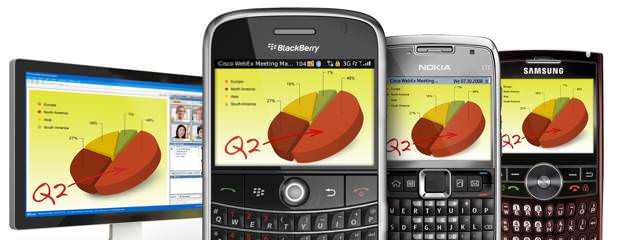
Application virtualization aimed at mobile devices is the then step. Not only does virtualization make mobile apps easier to migrate across servers and easier to support in a virtual environment, vendors are starting to offer tools to develop virtual apps that run on smartphones and other mobile devices. For instance, VMware markets its Mobile Virtualization Platform, which is designed to enable developers to build mobile apps for multiple environments and to let users have multiple profiles on a single device.
Data is the life blood of a business; it plays a crucial role in influencing key decisions and organisational developments, just as product offerings, expansion plans and financial acquisitions. Read ...
- · Rackspace debuts OpenStack cloud servers
- · America's broadband adoption challenges
- · EPAM Systems Leverages the Cloud to Enhance Its Global Delivery Model With Nimbula Director
- · Telcom & Data intros emergency VOIP phones
- · Lorton Data Announces Partnership with Krengeltech Through A-Qua⢠Integration into DocuMailer