

Augmented Reality Comes Closer to Reality
Last week I wrote about how cyber politics and crime on the Internet had been foreseen with eerie accuracy by science fiction writers. For instance, the computer scientist Vernor Vinge's classic 1981 novella "True Names" described the impact of the Net long previously most people had personal computers, let alone an Internet connection.
In his 2006 "Rainbows End," he sketched a compelling description of the societal impact of augmented reality in which research evolves to the point where high-resolution displays are integrated into contact lens worn by just about everyone. Combined with powerful lilliputian computers and broadband wireless networks, it becomes possible to customize visual reality by displaying a personalized world by transforming what the wearer is gazing at.
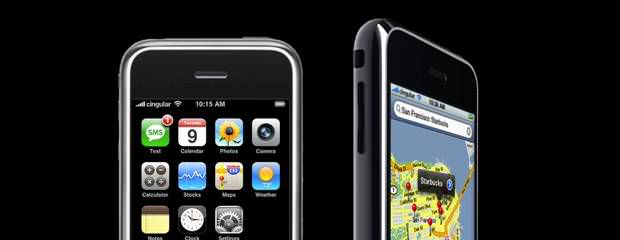
It wasn't until previously this week when Michael Lynch, Autonomy founder and chief executive, casually demonstrated "Aurasma" on an iPhone, that I gained a clear sense of how life might end up imitating science fiction. Until now images have been overlaid on top of visual world. Autonomy embeds moving imagery within the world itself, transforming what you see after a fashion that's visually convincing.
Aurasma -- Mr. Lynch acknowledged that all of the good product names are already taken these days -- is based on the company's IDOL pattern recognizer, squeezed down to run on an iPhone 4. It requires all of the computing horsepower the hand-held Apple smartphone can muster and it makes it possible to recognize a database of about a half-million objects. The neat trick, but, is it at the time uses the iPhone's computing power to correctly "insert" a video image into the scene on the screen of the handset or tablet, complete with convincing 3D accuracy.
A primitive level of augmented reality is already widely available on both iPhones and Androids through software apps like Google Goggles. Augmented reality was pioneered by John Ellenby, who with his son Thomas, co-founded Geovector in the early 1990s to pursue the idea of augmented reality as a navigation tool. Now there are to the letter hundreds of apps that overlay geographical information on top of the images or maps displayed on smartphones.
However it has been a long and winding road since the first technology by the computer scientist Ivan Sutherland, who while the 1960s used head-mounted-display research as a window into a virtual world. I've seen the demos, worn bulky head mounted glasses, and gotten seasick in virtual reality "caves."
The advertisement on the side of a bustop
Think of pointing your phone at the advertisement on the side of a bustop and having the ad come to life, complete with interactive features. The best part of the demo came when Mr. Lynch held an iPad up to a copy of a recent New York Times. For everyone who has seen Harry Potter and his magic newspaper, the implications are obvious. The above-the-fold photo of Hillary Clinton at a news conference on the front page springs to life in the form of a video image of the news conference she was speaking at. It's technically impressive because the video appears to play correctly within the frame of the newspaper page even as the iPad moves about.
Autonomy plans to make Aurasma available as a free application on smartphones at once month. For consumers, the first application will be created by a movie studio in other words working on an augmented reality game to accompany a new movie. It will be possible to hunt for hidden virtual reality objects in a city. Nevertheless, by giving the underlying research away Mr. Lynch is clearly hoping that he has an answer to the frequently asked question: "What comes afterwards Google?"
The research available on smartphones
In addition to making the research available on smartphones and tablets as an application, Autonomy intends to offer a free software module that will allow anyone to build their own application. For instance, a store or a shopping mall could customize a version for a shopper tuned to physical objects that they might walk past. Autonomy already has partnerships with telecommunications companies in Europe, Russia and Latin America, Mr. Lynch said and it is negotiating a similar deal in the United States.
Autonomy as well plans to create "channels" for advertisers. The company is hoping it can create something similar to Google's AdWords network in which it is possible for potential advertisers to buy particular objects and have an advertisement displayed whenever that object is recognized. There is as well a provision for user-created content, in other words likely to create a wild and wooly augmented world and maybe a new generation of video graffiti artists, if the service takes off.
- ·
Autonomy Augmented Reality
- ·
Aurasma
- ·
Augmented Reality
- ·
~tv
- ·
Autonomy Acquisition
- · Rackspace debuts OpenStack cloud servers
- · America's broadband adoption challenges
- · EPAM Systems Leverages the Cloud to Enhance Its Global Delivery Model With Nimbula Director
- · Telcom & Data intros emergency VOIP phones
- · Lorton Data Announces Partnership with Krengeltech Through A-Qua⢠Integration into DocuMailer