

Cloud threatens to end PC's reign
Most computer users have been in thrall to the PC for so long that they find it hard to imagine a time when it is no longer at the centre of their personal innovation landscape.
But envisaging such a future has not been a problem for many in the research industry, who have chafed in accordance with the long rule of Microsoft and Intel, the twin powers of the PC world. That helps to explain why so many have been eager recently to declare the PC era over, and the machine itself dead.
The banner of a post-PC world
Under the banner of a "post-PC" world, a motley crew of internet and research companies has been agitating for a different approach. It is one in which a wide range of "smart" devices, from phones to TVs, become the access points to digital information, which resides in the "cloud" - a term for the industrial-scale data centres that are taking over the jobs of data storage and processing.
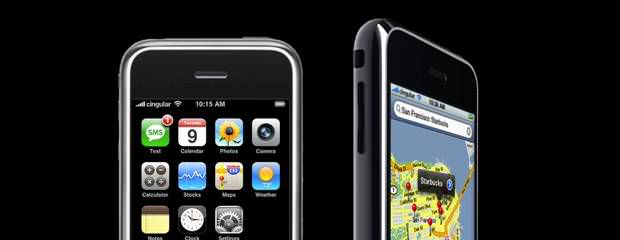
Having shown the way with devices just as the iPhone and iPad, Apple's chief executive Steve Jobs gave things another strong nudge this week with the iCloud.
Introducing Apple's iCloud, Mr Jobs delivered what appeared to be a carefully scripted line designed to nudge the venerable personal computer - in all its guises - closer to retirement: "We're going to demote the PC and the Mac to just be a device."
The man who
That echoed other recent comments from the man who, while after all in his early 20s, became one of the first rock stars of the tech industry on the back of his success in popularising personal computing.
Despite his rhetoric, Apple shows no sign of wanting to sideline its own contribution to the world of traditional personal computing. The Mac on the whole holds an important place in Apple's finances, accounting for about 33 per cent of its earnings as recently as 2009, according to Tim Cook, chief operating officer. The Mac has as well been on a roll of late, thanks both to the "halo effect" Apple has experienced from its other successful products, however also because of innovations just as the MacBook Air, which has set a new trend in slim, lightweight laptops. During PC sales declined 1 per cent in the first quarter of this year, according 28 per cent.
The Mac is now going through another mutation
The Mac is now going through another mutation. The latest version of the software for the machine, shown off by the company previously this week, reflects heavy influences from the touch-screen world of tablets. In spite of the recent successes of the Mac, even though, Apple's broader impact on traditional personal computing remains small. The 54m Macs that Apple estimates are in use around the world pales in comparison to the number of PCs running Microsoft's Windows, which number more than 1bn.
With the new generation of portable devices, Mr Jobs has a headstart. By his own reckoning, Apple's touch-screen operating system now has a 44 per cent share of this new market for smartphones and tablets.
The PC has fought off attacks like this earlier - most recently, from low-cost devices known as the netbooks, even though these in the end fell into line with the innovation architecture of PCs.
Microsoft has adopted a similar strategy in response to the latest pretender to invade its turf: it wants to redefine the tablet as a PC. Previously this month, it showed off its then version of Windows for the first time, running on a tablet - with a user interface adapted for the mobile, touchscreen world, nevertheless the guts of a full PC in other words capable of running all the applications that live on a personal computer.
The boundaries of the PC
Intel has as well sought to push out the boundaries of the PC. Late last month, the world's biggest chipmaker showed off the design for what it called an "ultrabook" - a lightweight machine it claimed would account for 40 per cent of laptop sales at once year, and reflecting heavy influences of tablets and Apple's MacBook Air.
As Phil Schiller, Apple's head of product marketing, declared recently of the thin, silvery slice of computing elegance: "The whole industry wants to copy it."
Ultimately, debates like this over the form-factor of personal computing devices are beside the point, says Roger Kay, a innovation industry analyst. "It's a semantic problem," he said. "The definition of PCs becomes irrelevant, it disappears."
While PCs will continue to sell in large numbers, but, they are rapidly declining in influence. Sales this year will be exceeded for the first time by smartphones, which have had a remarkable rise in the four years since Apple introduced the iPhone.
With a new form of personal computing device shipping in such large numbers, it is no surprise that the focus of attention is shifting.
"The PC is no longer the nexus of technology in the tech industry," says Pat Gelsinger, a former chief research officer at Intel. Developers have stopped writing software for the machine and are now producing applications that can run across a range of devices. "The PC is being seen as one more display device. The entire development world has moved on."
"We know we're selling into a lot of places where the households just don't have computers," Scott Forstall, head of Apple's software division, said this week. With the iCloud, he added, Apple wants to make it easier to run new digital devices without ever needing to hook them up to PCs. "So now, if you want to cut the cord, you can."
- ·
Cloud Threatens To End Pc Reign
- ·
Cloud Threaten To End Pc's Reign Death Of The Pc F
- ·
Icloud End Of Pc
- · Rackspace debuts OpenStack cloud servers
- · America's broadband adoption challenges
- · EPAM Systems Leverages the Cloud to Enhance Its Global Delivery Model With Nimbula Director
- · Telcom & Data intros emergency VOIP phones
- · Lorton Data Announces Partnership with Krengeltech Through A-Qua⢠Integration into DocuMailer