

Everything you need to know about the internet
So it is with us now. We're living through a radical transformation of our communications environment. Since we don't have the benefit of hindsight, we don't really know where it's taking us. And one thing we've learned from the history of communications technology is that people tend to overestimate the short-term impact of new technologies â and to underestimate their long-term implications.
We see this all around us at the moment, as would-be savants, commentators, writers, consultants and visionaries tout their personal interpretations of what the internet means for business, publishing, retailing, education, politics and the future of civilisation as we know it. Often, these interpretations are compressed into vivid slogans, memes or aphorisms: information wants to be free; the long tail is the future of retailing; Facebook just seized control of the internet, and so on. These kinds of slogans are really just short-term extrapolations from yesterday's or today's experience. They tell us little about where the revolution we're currently living through is heading. The question is: can we do any better â without falling into the trap of feigning omniscience?
Radical idea
Here's a radical idea: why not see if there's anything to be learned from history? Because mankind has lived through an earlier transformation in its communications environment, brought about by the invention of printing by movable type. This technology changed the world â indeed, it shaped the cultural environment in which most of us grew up. And the great thing about it, from the point of view of this essay, is that we can view it with the benefit of hindsight. We know what happened.
So let's conduct what the Germans call a Gedankenexperiment â a thought experiment. Imagine that the net represents a similar kind of transformation in our communications environment to that wrought by printing. What would we learn from such an experiment?
I'm writing this in 2010, which is 17 years since the web went mainstream. If I'm right about the net effecting a transformation in our communications environment comparable to that wrought by Gutenberg, then it's patently absurd for me (or anyone else) to pretend to know what its long-term impact will be. The honest answer is that we simply don't know.
The trouble is
The trouble is, though, that everybody affected by the net is demanding an answer right now. Print journalists and their employers want to know what's going to happen to their industry. Likewise the music business, publishers, television networks, radio stations, government departments, travel agents, universities, telcos, airlines, libraries and lots of others. The sad truth is that they will all have to learn to be patient. And, for some of them, by the time we know the answers to their questions, it will be too late.
3 DISRUPTION IS A FEATURE, NOT A BUGOne of the things that most baffles (and troubles) people about the net is its capacity for disruption. One moment you've got a stable, profitable business â say, as the CEO of a music label; the next minute your industry is struggling for survival, and you're paying a king's ransom to intellectual property lawyers in a losing struggle to stem the tide. Or you're a newspaper group, wondering how a solid revenue stream from classified ads could suddenly have vaporised; or a university librarian wondering why students use only Google nowadays. How can this stuff happen? And how does it happen so fast?
The answer lies deep in the network's architecture
The answer lies deep in the network's architecture. When it was being created in the 1970s, Vint Cerf and Robert Kahn, the lead designers, were faced with two difficult tasks: how to design a system that seamlessly links lots of other networks, and how to design a network that is future-proof. The answer they came up with was breathtakingly simple. It was based on two axioms. Firstly, there should be no central ownership or control â no institution which would decide who could join or what the network could be used for. Secondly, the network should not be optimised for any particular application. This led to the idea of a simple network that did only one thing â take in data packets at one end and do its best to deliver them to their destinations. The network would be neutral as to the content of those packets â they could be fragments of email, porn videos, phone conversations, images The network didn't care, and would treat them all equally.
Since the web went mainstream in 1993, our media ecosystem, if you like, has become immeasurably more complex. The old, industrialised, mass-media ecosystem was characterised by declining rates of growth; relatively small numbers of powerful, profitable, slow-moving publishers and broadcasters; mass audiences consisting mainly of passive consumers of centrally produced content; relatively few communication channels, and a slow pace of change. The new ecosystem is expanding rapidly: it has millions of publishers; billions of active, web-savvy, highly informed readers, listeners and viewers; innumerable communication channels, and a dizzying rate of change.
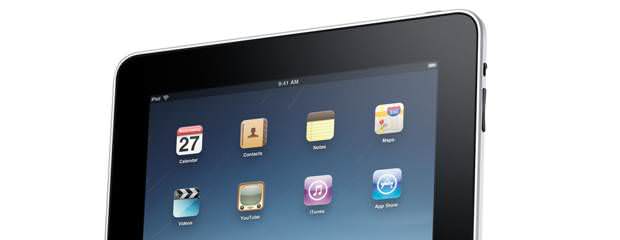
Here was a transition from a world in which the PC really was the computer, to one in which the network is effectively the computer. It has led to the emergence of cloud computing â a technology in which we use simple devices (mobile phones, low-power laptops or tablets) to access computing services that are provided by powerful servers somewhere on the net. This switch to computing as a utility rather than a service that you provide with your own equipment has profound implications for privacy, security and economic development â and public perceptions are lagging way behind the pace of development. What happens to your family's photo collection if it's held in the cloud and your password goes to the grave with you? And what about your documents and emails â all likewise stored in the cloud on someone else's server? Or your reputation on eBay? Everywhere one looks, the transition to cloud computing has profound implications, because it makes us more and more dependent on the net. And yet we're sleepwalking into this brave new world.
The analogue world
In the analogue world, copying was difficult and degenerative (ie copies of copies became progressively worse than the original). In the digital world, copying is effortless and perfect. In fact, copying is to computers as breathing is to living organisms, inasmuch as all computational operations involve it. When you view a web page, for example, a copy of the page is loaded into the video memory of your computer (or phone, or iPad) before the device can display it on the screen. So you can't even look at something on the web without (unknowingly) making a copy of it.
The internet/web is nothing but pay TV and the 'phone re-invented. You can forget about it being useful for much, except convenient spying on us proles.
- · Rackspace debuts OpenStack cloud servers
- · America's broadband adoption challenges
- · EPAM Systems Leverages the Cloud to Enhance Its Global Delivery Model With Nimbula Director
- · Telcom & Data intros emergency VOIP phones
- · Lorton Data Announces Partnership with Krengeltech Through A-Qua⢠Integration into DocuMailer