

Fluke Networks AirCheck WiFi Tester
The Ruckus Wireless ZoneFlex Smart WiFi system is designed to be a stable, easy to manage and highly secure wireless networking solution for the enterprise. The heart of the system is the ZoneDirector controller, which can communicate with up to 500 ZoneFlex access points.
The controllers
The controllers and the access points are highly configurable, they can be connected directly to your wired network or they can work in a mesh configuration.
We tested the ZoneDirector 1100, which will support up to 50 access points, with two ZoneFlex 7962 and two ZoneFlex 7363 access points. The ZoneDirector and the ZoneFlex 7962 access points were connected to the lab network via Gigabit Ethernet. The ZoneFlex 7363 access points were tested both in direct-connect and mesh modes.
The ZoneFlex 7962 will as well adapt its RF polarization to improve reception for portable devices, just as smartphones and tablets that may be operated in a variety of orientations. The ZoneFlex access points are able to handle in the extreme high speed connections on 802.11n, if they're connected to the network over Gigabit Ethernet.
The Ruckus Wireless gear
When you unpack the Ruckus Wireless gear, the first piece of equipment that needs to be configured is the ZoneDirector. You do this by connecting a computer to the ZoneDirector using an Ethernet cable, and at the time running the device's setup wizard. The primary goal of the initial setup is to give the ZoneDirector a name and to assign an IP address or tell it to use DHCP. Once you've done that, you can manage the ZoneDirector from any computer on the network by browsing to the device's IP address.
Once you can reach the Web-based management interface and set your user name and password, you can configure other settings, just as whether you want the ZoneDirector to act as a DHCP server on your wireless network. You can as well configure what Ruckus Wireless calls Smart Redundancy, which allows you to configure two ZoneDirectors so that one device stays in a standby state to take over if the other fails.
At this point, the ZoneDirector is set up enough that you can add access points if you wish. Nevertheless there are a wide number of other features that you can turn on or configure if you choose, including the type of security you want to use, the method of finding system time, telling it the country you're in so that it uses the correct WiFi channels, and telling the ZoneDirector whether you're going to be using mesh networking.
The access points in this test were the Ruckus ZoneFlex 7962, which the company describes as its highest performance access point. It's designed to support high definition IPTV, has extended range, supports vertical and horizontal polarization, and claims to provide up to 300MBps of user throughput. The ZoneFlex 7363 is a midrange access point and is designed for video streaming and VoIP (Voice over Internet Protocol) along with general data use. Both devices are dual band and support dynamic beam forming.
Adding the access points to the network is deep down a plug-and-play operation. All you do is plug in an Ethernet cable that's on the same network as the ZoneDirector, and plug in the power. The access point will find the ZoneDirector, request an IP address from the DHCP server and at that time check for up to date firmware. If the firmware on the access point needs updating, the ZoneDirector will do that, and straightway the ZoneFlex access point will be ready to use.
While most of the access point settings are handled automatically to meet the needs of most users, you can set a wide variety of characteristics, ranging from adding the GPS coordinates to the access point to telling the access point how you want it to handle the mesh environment. You should note that if you plan to use the access points in a mesh network, you must first connect them to an Ethernet connection so that you can set them up. Once that's done, you can disconnect the network cable, and take the access point to its operational location, and plug it into a power outlet. The access point will locate the network and join, retaining the IP address you assigned it at first.
Access points used in the mesh network can connect directly to wired access points or they can connect through other mesh access points. Ruckus allows up to five hops in the mesh. You should note that each hop in the mesh reduces performance because the access point in the middle must handle traffic from its mesh partners, as so then as any customers that are connected to it.
The mesh backhaul in this test took place on the 5GHz part of the 802.11n network, with all of the access points sharing the same channel for their internal communications. One feature of the meshed access points is that you can connect them to a wired Ethernet device through an extra Ethernet port on the access point. This means that you can include non-wireless capable devices or computers in your wireless network. You could, for instance, plug an Ethernet cable into one of the access points, attach an Ethernet switch, and to that switch attach devices just as UPS monitors that aren't available in wireless form.
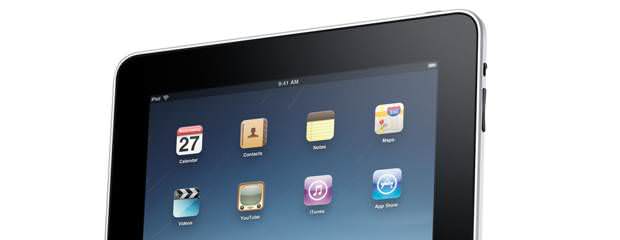
One of the advanced features of the Ruckus Wireless system is the ability of the access points to engage in beam forming. This means that once an access point detects a wireless client, it can direct the radio energy at the device to give it a stronger signal. I tested this with a variety of streaming media services and a variety of devices, including an Apple iPad, a Sony 102.11n equipped BluRay player, and a ThinkPad T410.
I watched the beam forming take place in real-time with a Fluke Networks AirCheck WiFi Tester set on the channel utilization mode. Once a device started the media stream, you could see the signal strength grow by as much as 10db. The result was that I could use streaming media in places where in the past I barely had a solid WiFi connection.
The final testing access points of the Ruckus Wireless system was with two 7962 APs connected to the Ethernet network, and two 7363 APs connected in a mesh network. One of the 7363 APs was at that time connected to a wired Ethernet device that didn't have the means to join a wireless network.
- ·
Ruckus Wireless Ipad
- ·
Wifi Time Connected Test
- ·
Configuring Ruckus Wireless On An Ipad
- ·
Ipad Ruckus Wireless
- ·
Ruckus Wireless Ipad App
- · Rackspace debuts OpenStack cloud servers
- · America's broadband adoption challenges
- · EPAM Systems Leverages the Cloud to Enhance Its Global Delivery Model With Nimbula Director
- · Telcom & Data intros emergency VOIP phones
- · Lorton Data Announces Partnership with Krengeltech Through A-Qua⢠Integration into DocuMailer