

Paolini: Data revenues to surpass voice revenues at DoCoMo
Despite all the growth in data ARPUs, data still accounts for a smaller portion of revenues than voice, despite using the majority of network resources. In the US, data accounts for only 35 percent of ARPU at AT&T, and 36 percent at Verizon, even though about a third of subscribers have a smartphone. At Vodafone in Europe 30 percent of ARPU comes from data; in Africa 19 percent; in India 11 percent. At the current growth rate, the balance between voice and data is set to reverse soon.
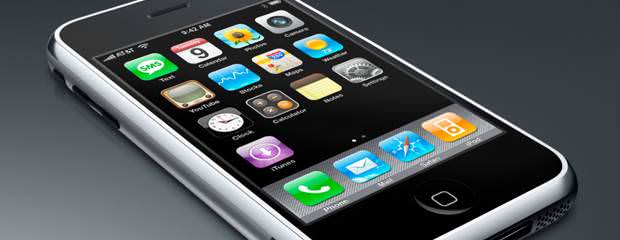
In Japan this is happening already at Softbank and NTT DoCoMo. At NTT DoCoMo voice and data ARPU are pretty much the same, but by the end of the current fiscal year (March 2011 in Japan), data revenues will be higher than voice (Figure 2), driven by the combination of lower voice use, and growing adoption of more intensive--and expensive--data plans, and of video applications (Figure 3). At Softbank, pushed by the exclusive and very successful deal on the iPhone, the data ARPU (¥2030) has crossed voice ARPU (¥2250) in the last reported quarter.
The voice/data ARPU reversal marks a major shift in the wireless industry. Voice will see its role of cash cow for mobile operators reduced, not because as some feared it would be replaced by VoIP, but because subscribers use increasingly their phones for data instead of talking to each other. As expected, this change in behavior is especially notable among younger subscribers, as data from the UK indicates (Figure 4).
It is not surprising to see that this is happening in Japan. Data usage and corresponding ARPU has been among the highest in Japan since mobile data got off the ground. In light of the most trite sociological stereotypes, it is not surprising that loud Americans prefer to chat endlessly on the phone, while the more reserved Japanese prefer means of communications that are far less obtrusive to the people around them. And if you spend, as most people in the US do, one or two hours alone in your car driving to work, you have plenty of time to get your MOUs up to 1000 minute mark (by comparison, at NTT DoCoMo voice plans start with an allowance of 25 minutes, which is what many people use in one day in the US). (Unfortunately the most resourceful among us in the US have learned that texting too can be used to relieve the boredom of the commute, but that's a topic for another day). If instead of driving, you spend the same time in public transportation or dense urban environments, you are less likely to find it pleasurable to talk over the phone for long times.
The difference in voice
Yet the difference in voice and data usage is sufficiently large to suggest that there is something else at play that makes the US stand out as the exception--and not only with respect to Japan. The high MOU levels in the US have been triggered and sustained by an extremely favorable pricing for voice. To drive adoption of the service, US operators offered generous buckets of minutes to their subscribers, while operators in other countries used metered billing for voice calls. With a monthly allowance, subscribers try to maximize the time spent on the phone before reaching the limit; with metered charges, subscribers try to minimize the amount spent on the phone, to the advantage of services like texting that sharply reduce charges. For a long time, for US subscribers data was more expensive than voice simply because it was not included in the monthly allowance--and it is still is not in many cases.
- ·
Softbank Data Arpu
- ·
Docomo Data Arpu To Surpass Voice Arpu
- ·
Softbank, Data Arpu More Than Voice
- ·
Ntt Docomo Data Arpu
- ·
Smartphone User Arpu Data Voice Usage
- · Rackspace debuts OpenStack cloud servers
- · America's broadband adoption challenges
- · EPAM Systems Leverages the Cloud to Enhance Its Global Delivery Model With Nimbula Director
- · Telcom & Data intros emergency VOIP phones
- · Lorton Data Announces Partnership with Krengeltech Through A-Qua⢠Integration into DocuMailer