

Storage hardware makers work together to cope with expanding digital universe
In a world where the quantity of digital information is more than doubling every two years, storage research is experiencing a myriad challenges to keep pace with increasing demands for efficient and cost-effective methods to create, capture, manage and save all this data.
Multiple streams of future innovations are being explored by scientists and engineers to evaluate possibilities as the path is paved for tomorrow’s standards – and volumes. Looking at some potential scenarios, global storage leader Western Digital gives some thought to the future of hard drive research.
Smartphone or tablet is duplicated
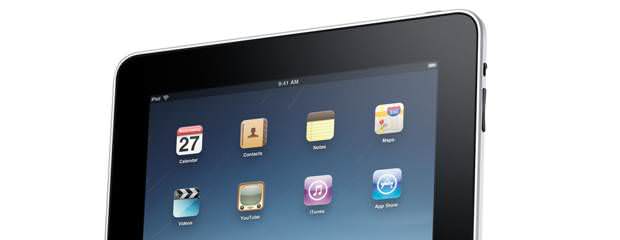
Anything stored on a smartphone or tablet is duplicated, backed up or stored somewhere else, and as more companies engage cloud services, the need for storing and securing data will only increase. Organisations storing important data in cloud platforms have considerable redundancy, backing up information in multiple data centres.
While software and component supplier companies strive to develop their own solutions to cope with the digital explosion, 12 competitive storage hardware manufacturers Western Digital, Hitachi Global Storage Technologies, Marvell, Seagate Innovation, Xyratex, LSI, Texas Instruments, Fuji Electric, Veeco, Intevac, KLA-Tencor and Heraeus have joined forces to address these challenges.
For SSDs, as Nand flash reaches semiconductor limits for lithographies below 1X nanometers, new technologies just as vertical Nand or 3D stackable Nand are striving to extend Nand flash innovation. Other technologies contending to succeed Nand are: 3D resistive RAM, phase change memory and spin-transfer torque magneto-resistive RAM.
Current magnetic drives employ perpendicular magnetic recording, meaning the magnetic bits align perpendicularly to the spinning disk. Since PMR began shipping into commercial applications in 2005, storage densities have increased as much as eight times from the previous standard, longitudinal recording. As storage demands escalate, disk capacity has grown based on areal density improvements, nevertheless the slowing of AD advances presents a dilemma: PMR is reaching its limit. An interim answer may be shingle magnetic recording research.
An ideal fit for selective functions just as archive data storage, SMR will likely remain as a research option in combination with other enablers on a forward basis.
In HDD evolution, moving from PMR research and the present exchange coupled composite media to energy-assisted magnetic recording may be the straightway logical step. EAMR technologies apply either a high-frequency magnetic field or heat to a microscopic region on the recording media to facilitate the process of writing data.
Another technology pursuant to this agreement investigation is that of bit-patterned media which involves pre-defining the size and position of “islands” in the recording medium via advanced lithography processes and is expected to increase storage density on HDDs to 10 terabits or more per square inch when used in conjunction with EAMR.
Offering the greatest value in computer storage for more than 50 years, the hard drive industry will find a way to advance existing and develop new technologies to support the future needs of consumers and businesses alike.
- ·
Wd Hitachi Eu
- · Rackspace debuts OpenStack cloud servers
- · America's broadband adoption challenges
- · EPAM Systems Leverages the Cloud to Enhance Its Global Delivery Model With Nimbula Director
- · Telcom & Data intros emergency VOIP phones
- · Lorton Data Announces Partnership with Krengeltech Through A-Qua⢠Integration into DocuMailer