

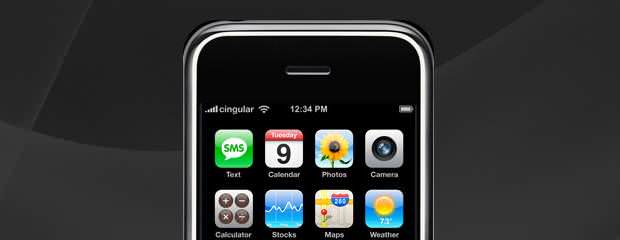
This is (hopefully) the glorious future for wireless hotspots
While wandering around midtown Manhattan last Thursday afternoon, I was attempting to keep track of the Yankees opening day game versus the Tigers via the MLB.com At Bat 2011 app on my iPhone. As you can imagine, data reception sucked; several times, the app told me it couldn't access the network. Thanks again, AT&T.
Second about using my iPad
I thought for a second about using my iPad by connecting to a local Wi-Fi network. However first I would have had to have identified a public network, at that time hope Safari could handle the interstitial sign-up pages. Even if I connected successfully, once I wandered out of that particular hotspot coverage area into another I'd have to go through the entire Wi-Fi hotspot location, identification and sign-up rigmarole.
Perhaps once the HSPA-Plus "4G" iPhone 5 likely coming later this summer might alleviate some of AT&T's data network problems. In a year, but, local Wi-Fi hotspots could be as easy to connect to as a cell network, thanks to an nearly ignored announcement last month concerning a new set of Wi-Fi specifications.
3D cellphones and new tablets seemed to be the take-away from the CTIA wireless show in Orlando last month. However the biggest — and seemingly most ignored — bit of news came from the Wi-Fi Alliance, innocuously entitled "Wi-Fi Certified Hotspot Program to Ease Subscriber Connectivity in Service Provider Wi-Fi Hotspots."
The Alliance hopes to make connecting to a local Wi-Fi hotspot as seamless as cellphone roaming. If successful, the repercussions could be startling for device makers, hotspot providers and cellular carriers, completely reconstructing the business and consumer paradigms of mobile broadband connectivity.
Wi-Fi's big problem is its proprietary locality. We've all turned on the Wi-Fi on a cellphone, laptop, tablet, et al, when we're away from home, hoping to find a public or unprotected Wi-Fi network to latch onto among the dozens of networks the device detects. As my — and probably a lot of your — experiences indicated, connecting to Wi-Fi away from home is a level 10 headache.
What the Wi-Fi Alliance is proposing is Wi-Fi ibuprofen — a set of universal connectivity specifications all Wi-Fi hotspot providers and device makers would adopt. Once implemented, these specification would foster the kinds of business partnerships between hotspot providers and cell carriers similar to those between airlines, hotels and car rental companies.
Stitching at the same time the disparate Wi-Fi hotspots into an nearly seamless network will have multiple benefits. Bear in mind, this is all just off the top of my head. The full range of benefits — maybe even the greatest of the bunch — may only be revealed if this glorious Wi-Fi future comes to pass.
Over-burdened cell data networks could have a huge load lifted from them if your phone could latch on to a Wi-Fi site instead. Carriers could lift any data caps they have or may implement, and you'd be able to make a lot more VoIP (Voice over Internet Protocol) calls.
You wouldn't need a 3G tablet if you can seamlessly connect to any Wi-Fi hotspot.And all digital cameras would now be able to connect to the net and transmit your photos just like your cellphone — only these would be much better pictures, by nature — with no need for an Eye-Fi card.
- ·
Tablet With Wireless Hotspot
- ·
Future Of Wireless Voip
- · Rackspace debuts OpenStack cloud servers
- · America's broadband adoption challenges
- · EPAM Systems Leverages the Cloud to Enhance Its Global Delivery Model With Nimbula Director
- · Telcom & Data intros emergency VOIP phones
- · Lorton Data Announces Partnership with Krengeltech Through A-Qua⢠Integration into DocuMailer