

Thumbs Up for Texting
The wireless industry was built on voice communications, but increasingly consumers are texting almost as much as they're talking, and they're not doing this because they're afraid of going over on their minutes. The trend toward using thumbs instead of vocal chords is causing a shake-up in both messaging innovation and the way carriers view voice and data pricing.
Flat voice usage paired with exponential growth of SMS and other messaging technologies, as well as the emergence of data-driven services like VoIP over 3G, are giving rise to an upheaval in not only the way consumers communicate but also the way they pay for our wireless services. Here's a look at how one of the best deals in the wireless industry is driving innovation and getting cheaper by the day.
When asked whether the teen segment's penchant for texting will drive voice even further into the ground as they grow into adults, Entner says he expects voice usage to stay right around where it is. There's no replacing voice once you enter the business world, Entner says. They'll be forced to start talking as they enter the workforce.
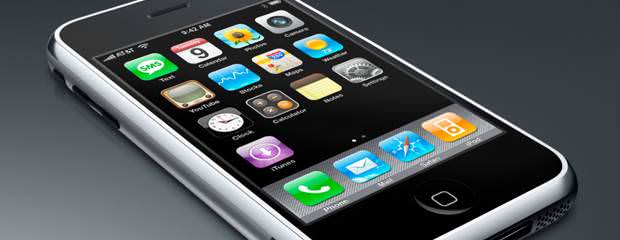
TXT 4 FREEIf you're not buying Entner's conclusion that texting is indeed cheap, then Pinger hopes you'll believe that absolutely free is as cheap as it gets. Pinger's app, TextFree for the iPhone, allows users to text all they want for nothing. The idea is simple: Text all you want in an ad-supported client, with a unique phone number provided by Pinger; and call it your texting number.
Greg Woock, co-founder and CEO of Pinger, says the number of advertisements that TextFree serves up has allowed the company to offer the app, which originally sold for $5.99, for free. Woock says Pinger plans on adding free voice, using VoIP, later this summer.
THE UNIQUE PEEKIn the beginning
THE UNIQUE PEEKIn the beginning, there were phones that did only voice. Slowly, texting became a core feature for any cell phone, given that you were willing to pay for it. Today, that scenario is happening in reverse, with messaging- and social-centric phones that are marketed toward teens whose main focus is thumb-based communications. But what about a phone that eliminates voice altogether? Enter the Peek Classic and Peek Pronto, BlackBerry-style devices that feature a full qwerty keyboard, a color display and little else. The Classic, which sells for $19.95, can only handle e-mail, while the Pronto, which sells for $59.95, can handle e-mail and SMS. They're examples of an extreme business case, but the company's survival over the past couple years is a testament to the power of messaging, whether it be e-mail, IM or SMS, on a mobile device. Originally marketed toward the consumer set, Peek seems to be finding a niche as a device for small businesses.
It's ideal for small and medium business that don't want to pay to outfit all of those frontline employees with a smartphone, says Peek CEO Amol Sarva, adding that messaging by itself is less of a distraction for workers and can lead to higher productivity.
The value proposition varies for different markets
The value proposition varies for different markets, and Pan-European roaming is one of the real pain points for business users. One day of roaming across Europe, when you get say 50 e-mails, would cost you 20 or 30 Euro. So the Peek service is 12 euros for unlimited use across the whole market.
- · Rackspace debuts OpenStack cloud servers
- · America's broadband adoption challenges
- · EPAM Systems Leverages the Cloud to Enhance Its Global Delivery Model With Nimbula Director
- · Telcom & Data intros emergency VOIP phones
- · Lorton Data Announces Partnership with Krengeltech Through A-Qua⢠Integration into DocuMailer