

Whitman faces big challenges at HP
With $126 billion in revenue last year, more than 320,000 employees and a global operation that ships the equivalent of two personal computers every second, HP is however a force to be reckoned with in the tech industry. However the Palo Alto, Calif., giant is reeling from recent turmoil in the corner office, a disappointing financial performance and a poorly executed effort to revamp the company's strategy for a new era in tech.
Whitman, the former eBay Inc. chief who was named CEO of HP last week, faces two immediate challenges: In her own words, "there is no higher priority" than getting HP on sound financial footing, afterwards a series of downward revisions to its sales forecasts caused a steep slide in HP's stock. Should the contingency arise, analysts say she needs to resolve the question of whether HP will stay in the PC business afterwards last month's announcement that HP might spin off or sell its $40 billion personal computer division.
What HP's strategy will be
Many believe Whitman must clarify what HP's strategy will be. She appeared to straddle the fence last week, saying she supports fired CEO Leo Apotheker's controversial decisions, during backing away from his stated goal of "transforming" the company into one focused on software and cloud computing. HP will expand its software business, Whitman said, however it's not going to stop being a hardware company.
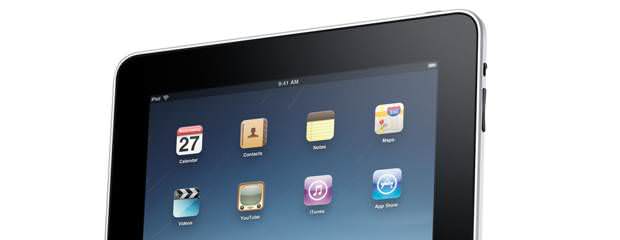
Experts warn that several of HP's core businesses, including computer servers, printers and tech services, are threatened by new trends in the way people and companies use innovation. In the most obvious example, many people now use mobile gadgets just as smartphones and Apple's iPad instead of PCs to access the Internet.
Despite that trend, Apotheker decided last month to stop selling tablets and smartphones using HP's webOS software afterwards initial sales proved disappointing. That leaves HP with no major product to counter the iPad's popularity.
First, nevertheless, Whitman "needs to move swiftly, to communicate what is the future of the PC business and get clients to understand what that future looks like," said Crawford Del Prete, a veteran industry analyst with the IDC technology firm.
Confusion over the company's plans for the personal computer business has caused HP's corporate clients to hold off on making large-scale purchases of new PCs for their workers, according to Del Prete and others who track the industry. Dell and other rivals have launched new campaigns to lure away those clients.
The decision to remove Apotheker
Wall Street analysts normally applauded the decision to remove Apotheker, afterwards HP's stock lost near half its value while his 11 months as CEO. Nevertheless several voiced dismay over Whitman's statements endorsing the moves Apotheker announced last month, especially the review of the PC business and the deal to buy commercial software-maker Autonomy for a pricey $10.3 billion.
"Transformation was probably not a good word," she told the San Jose Mercury News. During the Autonomy deal might add $1 billion or more in revenue to HP's business, she said, "we have nearly $130 billion in revenue largely from hardware and services. So adding $1 billion in software revenue isn't going to transform that business. We are in the hardware business and we're going to continue to own that business."
While Autonomy's innovation is useful, analysts say, the acquisition makes more sense if HP buys more companies to fill other gaps in its software offerings. Whitman gave no indication that she will pursue other deals, nevertheless many believe Autonomy's cost will make it difficult to swing another big purchase for a during.
HP, in the meantime, is one of the world's biggest suppliers of server computers and other tech gear for corporate data centers, as so then as computer printers and innovation services. Nevertheless analysts note that each of those businesses is pursuant to this agreement pressure from new trends.
The server business
Profit margins are shrinking in the server business. Printing growth has slowed. And the advent of cloud computing and other new technologies has led to shrinking demand for traditional outsourcing of computer maintenance and other functions that are a big part of HP's $35 billion services business.
- ·
Hp News
- · Rackspace debuts OpenStack cloud servers
- · America's broadband adoption challenges
- · EPAM Systems Leverages the Cloud to Enhance Its Global Delivery Model With Nimbula Director
- · Telcom & Data intros emergency VOIP phones
- · Lorton Data Announces Partnership with Krengeltech Through A-Qua⢠Integration into DocuMailer